|
“The history of the Peace River Valley of Florida in the nineteenth century is a tale of violence, passion, struggle, sacrifice, and determination. It was written with the lives and deaths of Creeks and Seminoles who refused to surrender their independence; of runaway slaves and fierce black warriors; of white frontiersmen struggling to build a better world for themselves and their families; of men and women who supported the Confederacy and their brothers and sisters who would not abandon the Union; of settlers from the defeated South and, later, from the North and Midwest; and of freedmen and women who suffered to overcome the shackles of slavery, who farmed, who built the railroads, and who toiled in the broiling heat of open-pit phosphate mines.” Canter Brown, Jr., Florida’s Peace River Frontier. Serene and generally slow-moving, the Peace River—known as “Rio de la Paz” on old Spanish charts—emerges from the Green Swamp and flows more than 100 miles past largely undeveloped shorelines. Calusa Indians once utilized the waterway in large numbers, especially the lower stretches near where the river meets the Gulf, and Seminole Indians called the river home in the 1700s and early 1800s. They named the river Tallackchopo, “The River of Long Peas,” after the wild peas that were abundant along the riverbanks. [Read more…]
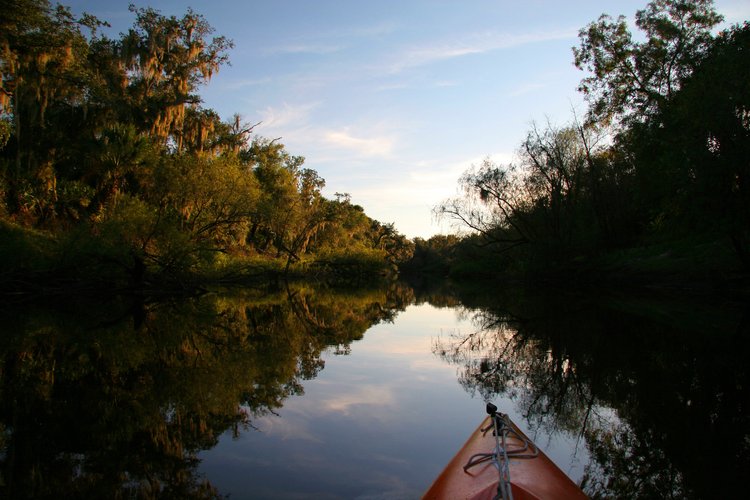
Photo credit: Doug Alderson
|