|
$$PLAIN_TEXT_PREVIEW$$
|
Inspiring. Meaningful. Adventure.
|
|
Place-based Learning in the Great Outdoors
|
|
New Year, Continuing Changes. First, the good news. From our point of view, it seems that our message is getting across about the benefits of immersion in the natural world, as we are nearing a sold out season. More and more folks are also becoming aware of the climate crisis we all face. With the continuing loss of biodiversity and water scarcity that is causing mass migrations of humans and other species, these and other eco-catastrophies have left us wondering if we have learned anything. We need to figure out what the future needs from us, keeping in mind that Nature always bats last. We wish everyone a Happy New Year and hope you enjoy this month's edition.
|
|
2021-2022 Paddle Florida Season
|
|
Our 2021-2022 season is almost SOLD OUT! The Wild, Wonderful Withlacoochee trip has 8 spots remaining and the Springtime on the Chipola trip has 4 spots remaining.
|

|
How You Can Give Back to Florida's Waters By Ryan Smart
Executive Director
Florida Springs Council |
|
|
|
As we look forward to 2022, I am hopeful about the future of Florida’s waters. With every challenge comes an opportunity to fix the mistakes of the past and create a better Florida for future generations. Until now, we have lacked the resources and public support to take on the most critical fights. Thanks to springs advocates across Florida, that is changing. This month, I was going to write about what you can do in the new year to help Florida’s springs. But, John Jopling - President of Ichetucknee Alliance and Board Member of the Florida Springs Council - beat me to it. So, I thought I would share some of John’s thoughts on how you can give back meaningfully to Florida’s springs from his recent guest column in the Gainesville Sun: Educate yourself about problems that are affecting our springs (nutrient poisoning, flow declines, recreational impacts). Join your local springs or river group and find a way to use your best talent in support of that group’s activities. Let your elected representatives and state agency officials know that clean water is important to you. Demand effective actions — not just large amounts of money, but effective actions — to protect our springs and aquifer.
[Read more…]
|
|
News Articles of Interest
|
|
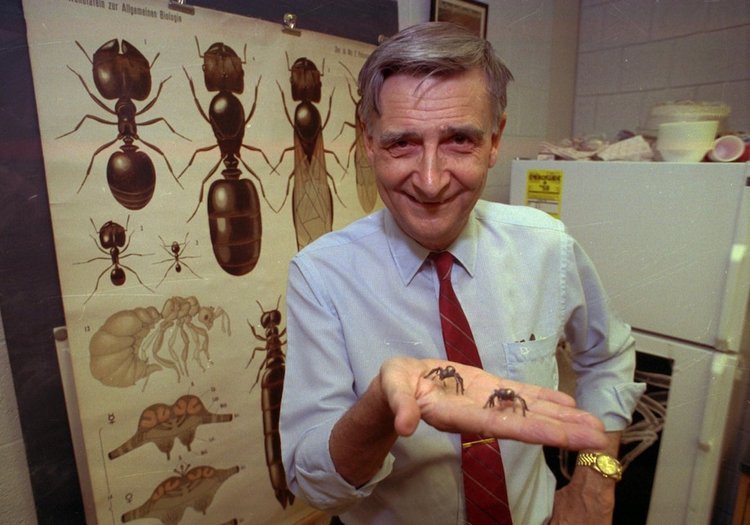
Edward O. Wilson, Harvard naturalist often cited as heir to Darwin, dies at 92 By Patricia Sullivan
The Washington Post |
|
|
|
Edward O. Wilson, a Harvard naturalist whose mapping of social behavior in ants led him to study social behavior in all organisms and who became one of the greatest naturalists of his generation, died Dec. 26 in Burlington, Mass. He was 92. The E.O. Wilson Biodiversity Foundation announced but did not provide a cause.
Often cited as Charles Darwin’s greatest 20th-century heir, Dr. Wilson was an eloquent and immensely influential environmentalist and was the first to determine that ants communicate mainly through the exchange of chemical substances now known as pheromones.
He discovered hundreds of new species by putting his hands in the dirt as a field biologist, synthesized evolving thinking in science and helped popularize terms such as biodiversity and biophilia to explain it. Of his many accomplishments in evolutionary biology, his biggest contribution was probably in the new scientific field of sociobiology, in which he addressed the biological basis of social behavior in animals, including humans. [Read more…]
Photo credit: AP
|
|
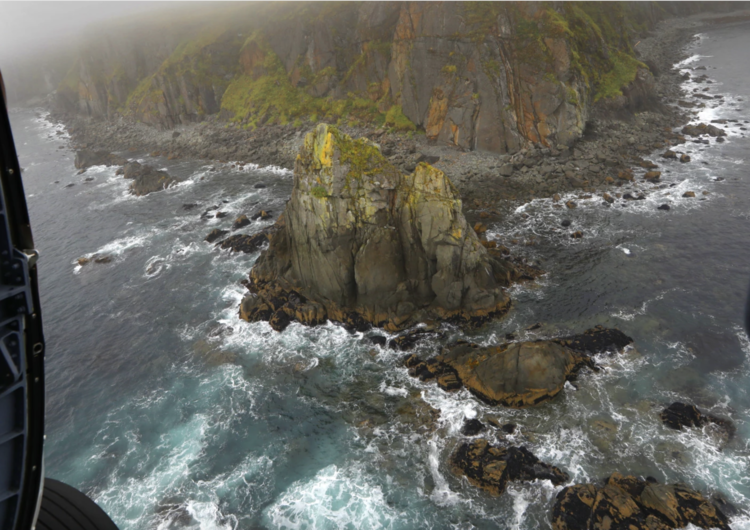
Unprecedented die-offs, melting ice: Climate change is wreaking havoc in the Arctic and beyond By Susanne Rust
Los Angeles Times |
|
|
|
Forces profound and alarming are reshaping the upper reaches of the North Pacific and Arctic oceans, breaking the food chain that supports billions of creatures and one of the world’s most important fisheries. In the last five years, scientists have observed animal die-offs of unprecedented size, scope and duration in the waters of the Beaufort, Chukchi and northern Bering seas, while recording the displacement and disappearance of entire species of fish and ocean-dwelling invertebrates. The ecosystem is critical for resident seals, walruses and bears, as well as migratory gray whales, birds, sea lions and numerous other animals. Historically long stretches of record-breaking ocean heat and loss of sea ice have fundamentally changed this ecosystem from bottom to top and top to bottom, say researchers who study its inhabitants. Not only are algae and zooplankton affected, but now apex predators such as killer whales are moving into areas once locked away by ice — gaining unfettered access to a spoil of riches. [Read more…]
Photo credit: Carolyn Cole / Los Angeles Times
|
|
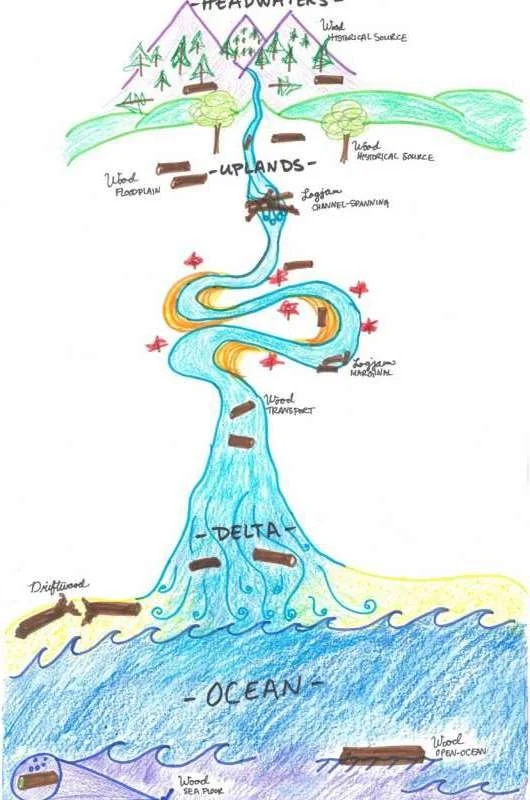
Disrupting flow of wood from rivers to oceans impacts marine environments From Colorado State University |
|
|
|
Ellen Wohl has always been fascinated by what happens in the deep sea. She studies interactions between rivers and water, the flow of sediment and wood, and the landforms created as a result. A Colorado State University Distinguished Professor, Wohl said that she saw the first pictures of organisms found near hydrothermal vents in the deep sea in the 1970s when they were first discovered. Her interest in the sea—and how organisms on pieces of wood that sink to the ocean floor create these communities—led to a new area of research for the fluvial geomorphologist. A lot of wood used to end up in oceans, but humans around the world have interrupted the cascade, Wohl said. The related study, "Damming the wood falls," was published Dec. 10 in Science Advances. [Read more…]
|

|
Florida will begin emergency feeding and rescue of starving manatees By Jessica Glenza
The Guardian |
|
|
|
Florida wildlife officials will undertake a manatee feeding and rescue operation involving hand-feeding the mammals romaine lettuce, amid unprecedented mortality among the gentle aquatic creatures affectionately known as “sea cows”. Typically, manatees return to warm water winter feeding grounds, where they feast on plentiful seagrass. But algal blooms from polluted waters have devastated seagrass beds, and thereby wiped out the important food source for the manatees. Algal blooms and manatee deaths have been especially pronounced along Florida’s Atlantic coast, leading to record-breaking mortality. “Our agencies and Unified Command partners carefully considered all aspects of a short-term feeding trial,” said Shannon Estenoz, assistant secretary for Fish and Wildlife and Parks with the federal Department of Interior, in a release. “It is critical we help manatees in the short term with actions that are compatible with their long-term wellbeing and resilience.” [Read more…]
Photo credit: Joe Raedle/Getty Images
|
|
How To: Repair Holes Caused By Dragging Your Kayak
by Austin Kayak In this video, the team at Austin Kayak show you how to rebuild your keel if you have created a hole from dragging the back of the kayak across the ground. Click here for article & video.
|

|
Donate. Please consider making a donation to show your support of our mission of connecting people to nature and each other. Donate online here or mail a check to Paddle Florida, P.O. Box 5953, Gainesville, FL 32627. In appreciation of your donation, you will receive a special gift! |
|
|

|
Advertise With Us. You can reach over 6,889 monthly subscribers for $75/month, or get two months free by promoting your paddling-oriented product or service over 12 months for $750! Contact Bill Richards by phone at (352) 377-8342 or email for details. |
|
|

|
Shop With AmazonSmile. You can select Paddle Florida as your AmazonSmile charity at this link or in the Amazon App. Amazon will then donate 0.5% of the price of eligible purchases to Paddle Florida! |
|
|
|
|
|


